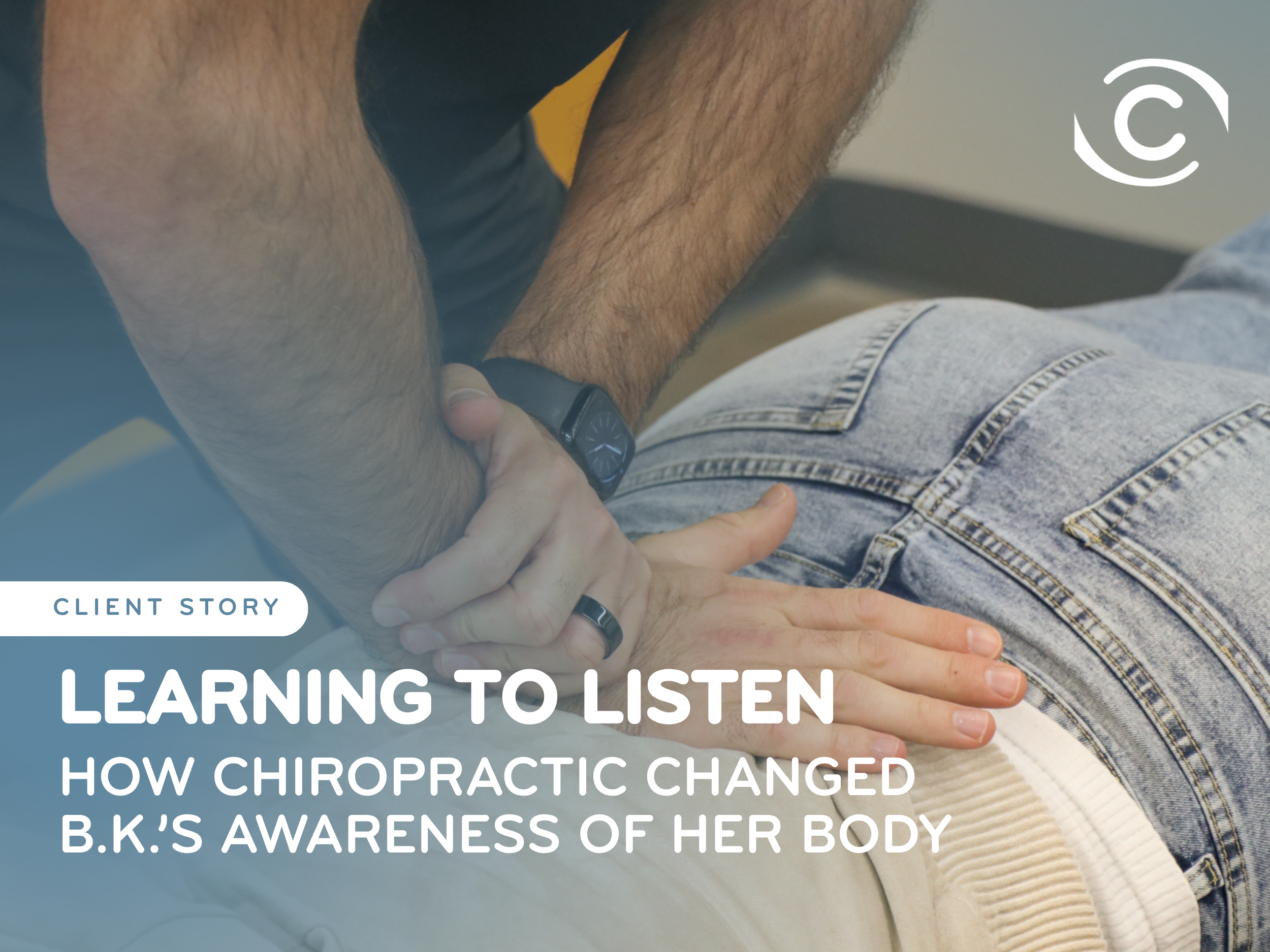
Learning to Listen: How Chiropractic Care Changed B.K.’s Awareness of Her Body
Most of us notice when something hurts. But over time, B.K. has learned to notice the smaller changes too, the tension building in her shoulders, the way stress shows up in her body, or when movement simply feels different than usual. For her, that growing awareness has become one of the most meaningful parts of consistent chiropractic care at ChiroWay of Woodbury.
B.K. leads an international team of data scientists, which means a lot of her workday is spent sitting in front of a computer. Outside of work, she and her husband enjoy long walks with their dogs, biking around Minnesota’s lakes, ballroom dancing, spending time with family and friends, and staying active.
When she first came to ChiroWay, she was already familiar with the effects that work and stress could have on her body.
“I, like many, carry my stress in my neck and shoulders,” she shared.
Rather than waiting for that tension to become more disruptive, she wanted chiropractic to be one of the ways she took care of herself proactively.
Learning What “Normal” Feels Like
One thing that changed as B.K. continued chiropractic care was how closely she began paying attention to her body.
She became more aware of how stress shows up physically, when her body doesn’t feel as at ease, and when something feels different from her normal.
That might sound simple, but it can make a meaningful difference in how someone responds to everyday life.
When we only pay attention once something becomes uncomfortable enough to interfere with our day, we are reacting to the effect. Greater awareness can help us notice some of the changes leading up to it.
That idea connects closely to the chiropractic principle of cause and effect.
The tension we feel at the end of a long week, for example, doesn’t necessarily appear out of nowhere. Our bodies are continually responding to things like stress, prolonged sitting, activity, movement, sleep and changes in routine. Becoming more aware doesn’t mean analyzing every sensation—it means getting better at recognizing your own patterns.
For B.K., consistency has helped make those patterns easier to notice.
“I start to really feel the spots in my neck and spine that are most prone to coming out of alignment when I’m not able to get in every week,” she said.
Awareness Changes How You Respond
The biggest shift isn’t simply noticing tension. It’s what B.K. does once she recognizes it.
When she can tell stress is settling into her neck and shoulders, she becomes more intentional about responding to it.
“I try to take more deep breaths and stretch my neck, face, and shoulders,” she shared.
Over time, chiropractic has become part of that same mindset.
She noticed a difference when she missed care or got out of her usual routine. Eventually, chiropractic became less about addressing one particular concern and more about being one of the ways she consistently takes care of herself.
“I just feel better when I go regularly.”
For B.K., chiropractic fits alongside movement, massage, stress management and the other choices she makes to support herself. It isn’t something she thinks about only when something feels wrong.
Taking Care of Today With Tomorrow in Mind
That proactive approach matters to B.K. because the things she wants to protect are much bigger than how she feels on any one day.
She and her husband want to continue walking their dogs, biking, traveling, exercising and enjoying the activities they love as they get older. Maintaining their independence is especially important to them.
“We want to ensure that we are able to enjoy those activities as we get older, and are able to live independently and self sufficiently as long as possible,” she shared.
That long-term perspective changes the question.
Instead of only asking, “Does something hurt today?” B.K. is also paying attention to “What am I noticing, and how can I continue taking care of myself?”
That is where awareness becomes valuable.
The more familiar we become with what ease, movement and our own version of “normal” feel like, the easier it can be to recognize when something begins to change.
You Don’t Have to Wait Until Something Hurts
When asked what she would tell someone who says, “I feel pretty good. Why would I need chiropractic?” B.K.’s answer reflects how much her perspective has evolved:
“You don’t have to wait until something hurts to take care of yourself.”
For her, chiropractic is now part of staying aware, staying consistent and supporting her ability to continue doing the things that matter most.
Her story is a good reminder that taking care of yourself doesn’t always have to begin with a problem. Sometimes it begins with simply getting better at listening—recognizing tension, noticing change and understanding what your body is communicating before it has to shout for your attention.