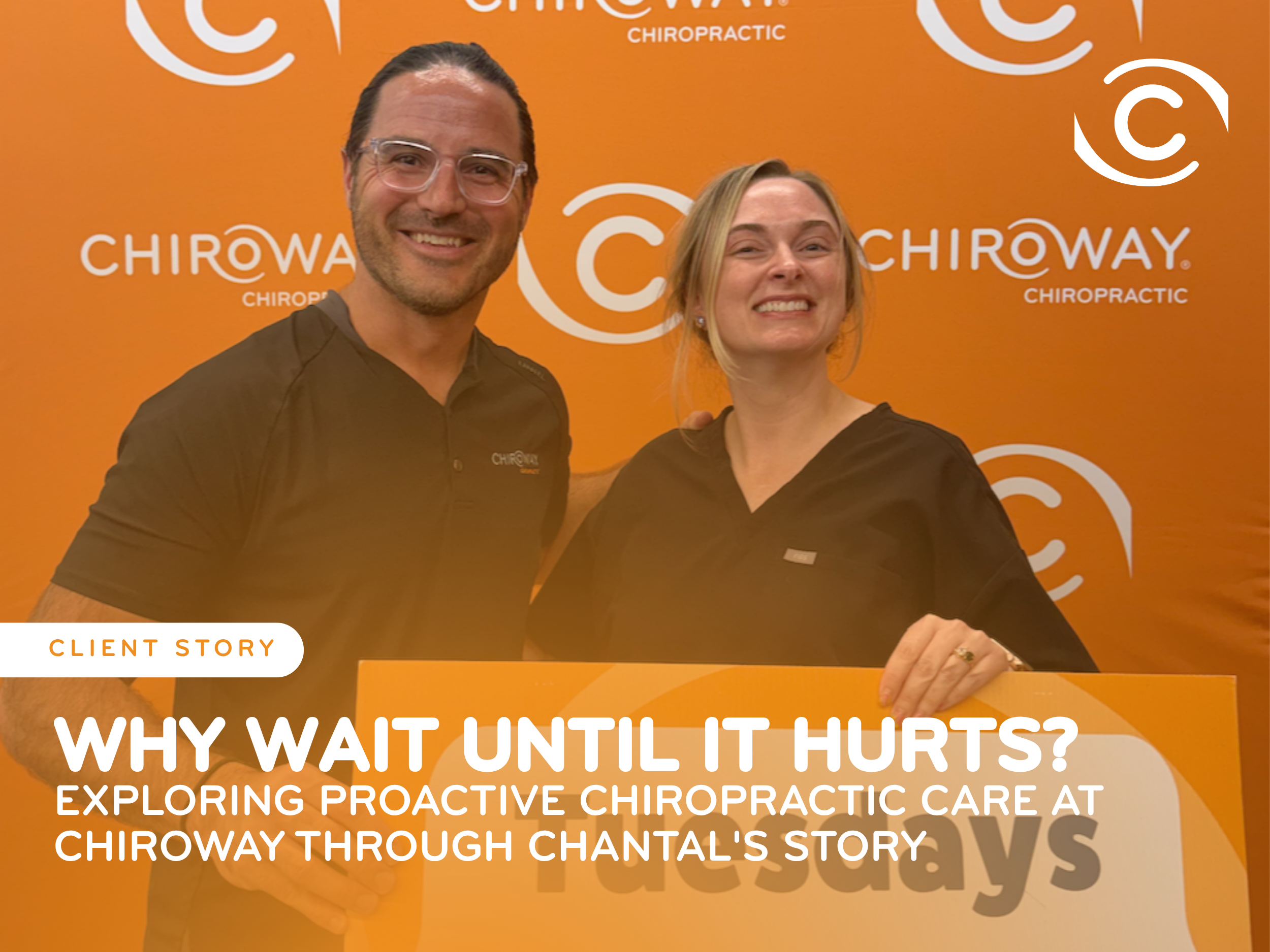
Why Wait Until Something Hurts? Exploring Proactive Chiropractic Care at ChiroWay Through Chantal’s Story
When was the last time you thought about taking care of your body when nothing was bothering you?
It’s funny how quickly discomfort can move something to the top of our priority list. A stiff neck, a sore back, or an ache that just won’t go away suddenly has us rearranging our schedules to do something about it. But once we’re feeling better, it’s just as easy to move on and forget about it altogether.
What if there were another way to approach chiropractic care?
For Chantal W., proactive chiropractic care wasn’t something she fully understood when she first walked into ChiroWay of Woodbury 13 years ago. Her reasons for starting looked a lot like those of many other people: she wanted to feel better and manage the physical demands of everyday life.
It was what happened over the following years that changed how she thought about chiropractic.
It Started With a New Career and an Aching Body
Fresh out of college, Chantal was beginning her career as a dental hygienist. She loved her work, but spending long days caring for patients came with physical demands she could already feel.
She wasn’t entirely new to chiropractic. She had received care in high school and remembered how good she felt afterward. Now that she was working full-time, getting back into that routine seemed like a good idea.
I knew that getting back into that rhythm would help me feel better and help with the longevity of my career. I was finally getting adult paychecks and my body was begging me to get started.
As luck would have it, ChiroWay was located in the same building as her dental office. She decided to check it out, and the convenience made it easy to return.
“The quick, convenient, and great care kept me coming back.”
Back then, Chantal primarily associated chiropractic with neck pain, back pain, injuries, and recovery. Although she already valued taking care of herself, feeling better and supporting her demanding new career were major reasons for starting. It’s a familiar way to think about chiropractic: something hurts, you seek care, and you hope to feel better.
But what happens after that?
Does Feeling Better Mean You’re Done?
Think about all the things your body does in a typical week. You might spend hours sitting at a desk, working on your feet, exercising, traveling, chasing after kids, or simply navigating a particularly stressful few days. Your body is responding to those demands all the time, whether you’re experiencing discomfort or not. This connects to an important idea in chiropractic philosophy: adaptation is continuous.
At ChiroWay, chiropractic isn’t viewed exclusively through the lens of pain. Your chiropractor also considers how your spine is functioning, how you’re moving, and the tension or changes identified during an assessment. Pain is important information, but it isn’t the entire picture.
Someone might feel comfortable today and still be interested in discussing their neurological function, movement, or whether chiropractic has a place in their broader approach to self-care.
That’s a different conversation from simply asking, “What hurts?”
For Chantal, the distinction became much more meaningful when life unexpectedly interrupted the routine she’d spent years building.
The Break in Her Routine That Changed Her Perspective
When COVID arrived, everything seemed to change at once. Chantal’s work became inconsistent. Her usual schedule disappeared, and the chiropractic care she’d grown accustomed to became less regular, too.
“COVID was a wild time. I had inconsistent chiropractic care, I had inconsistent work and the whole world felt like it was shutting down.”
Like so many people during that period, she found herself falling out of the habits that had previously helped her take care of herself. Eventually, she returned to a more consistent chiropractic routine. As she did, she noticed that she felt better and found it easier to prioritize her overall self-care again.
Looking back, she describes that experience as the moment her perspective really changed:
“That’s when my mindset really changed from “getting myself out of pain” to “preventative maintenance””
It wasn’t that she had suddenly discovered chiropractic for the first time. She’d already been receiving care for years. Instead, stepping away from her usual routine helped her recognize why she valued keeping it.
What If We Didn’t Wait for the Next Problem? Why Proactive Chiropractic Care?
We already understand the value of consistency in plenty of other areas of life. We don’t exercise only when we feel weak. We don’t suddenly start thinking about nutrition only when our diet catches up with us. And we don’t expect one good night’s sleep to make up for months of poor rest.
Taking care of ourselves is usually something we build into our lives, not something we do just once.
ChiroWay brings a similar philosophy to chiropractic: consistency over urgency.
Rather than making pain the only reason to consider an adjustment, ChiroWay encourages a broader conversation about spinal function, individual needs, and personal goals. That doesn’t mean every person needs chiropractic care at the same frequency, or that regular adjustments guarantee the prevention of future problems. Ongoing care is an individual decision based on assessment, preferences, and goals.
For someone like Chantal, however, the experience of being consistent had become something she genuinely valued.
She noticed differences in how she felt when she got out of her routine. She became more familiar with the tension that could build during demanding workdays. And she began thinking about chiropractic as one part of taking care of herself, rather than something reserved for uncomfortable moments.
Proactive chiropractic care became less about waiting for a reason to return and more about choosing a routine that made sense for her.
And as Chantal got older, that decision began connecting to something much bigger than her neck and back.
There’s a Lot More Life Beyond the Workday
Chantal loves being a dental hygienist and hopes to continue practicing for many more years. But spending her days caring for patients has also given her an interesting perspective on aging.
She sees people of all ages in her profession. Some older patients are still remarkably active, independent, and traveling the world. Others experience limitations much earlier. That contrast has made her think carefully about the kind of life she wants for herself. She wants to keep traveling with her husband, attending concerts, enjoying time with friends and family, staying mobile, and maintaining her independence for as long as possible.
Her work has also made her particularly aware of the physical demands she faces each day.
“I can instantly tell when I have had a bad posture day at work, or if something feels misaligned.”
Chantal reports noticing changes in tension, movement, and how she feels during demanding weeks. Over time, those experiences have become part of why she values maintaining her chiropractic routine. But her motivation isn’t simply about making it through another workday.
“I value being proactive and want to continue taking care of myself as I age.”
That long-term perspective can change the way we think about care. Instead of focusing exclusively on how we feel at this moment, we can also consider the activities, experiences, and responsibilities we hope to keep enjoying in the years ahead.
For Chantal, proactive chiropractic care is one piece of that bigger commitment to herself.
Making Room for What Matters With Proactive Chiropractic Care
It’s easy to make time for something when it becomes urgent. The harder part is making room for the things that matter before they demand our attention.
For Chantal, chiropractic has earned a place in her routine alongside the other choices she makes to take care of herself. Not every visit needs to begin with a problem, and not every decision about her health needs to be driven by discomfort.
That perspective is worth carrying into our own lives. Think about the things you want to keep doing. The places you want to visit, the people you want to keep up with, the work you enjoy, and the experiences you don’t want to miss.
We can’t predict everything life will bring, but we can be intentional about how we take care of ourselves along the way. Because sometimes the best time to think about the life you want to keep living is while you’re already out there living it.